WRITTEN BY SOFIA FERNANDES - OUTREACH & EDUCATION COORDINATOR
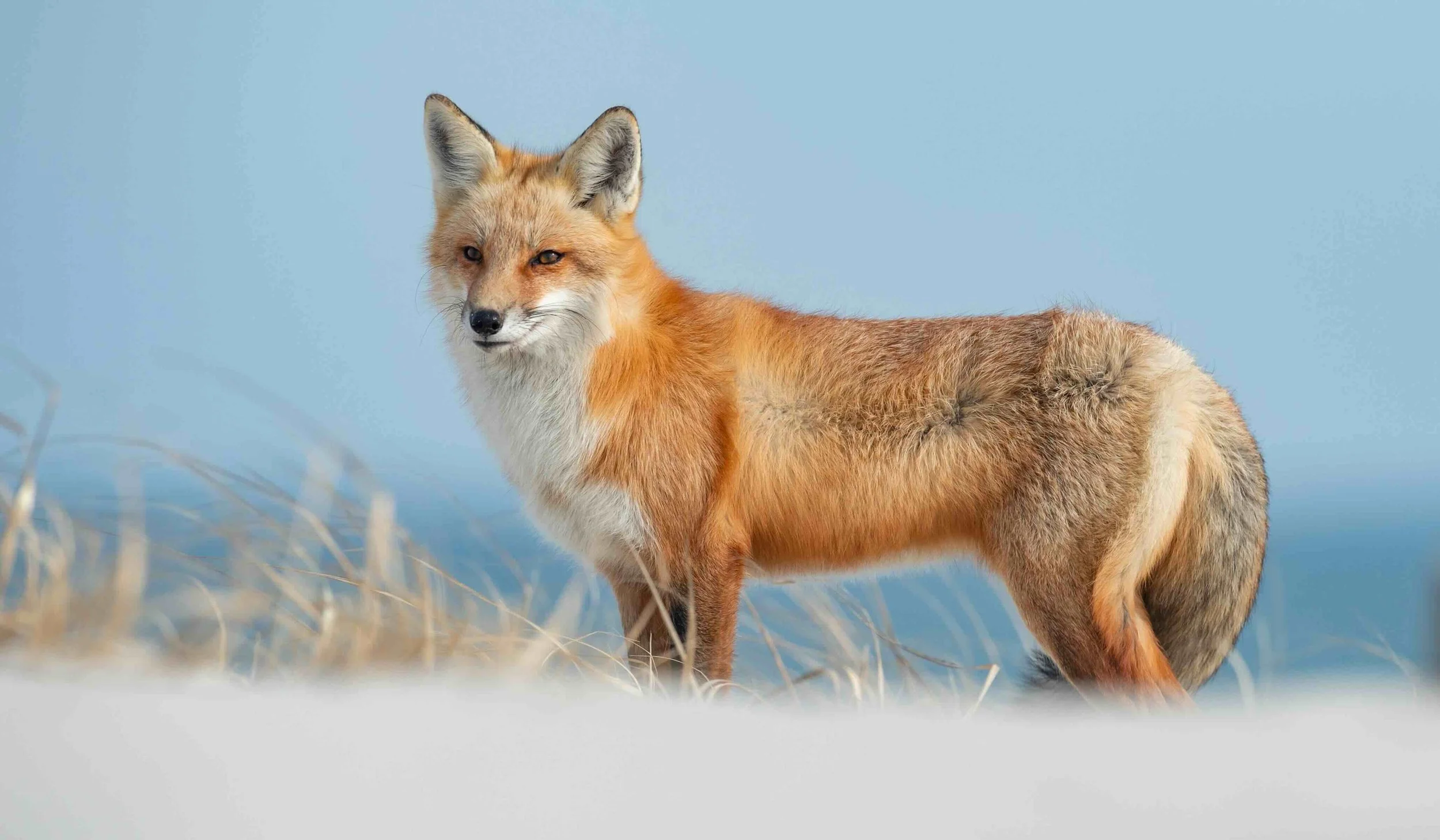
The Eastern American red fox (Vulpes vulpes fulva) is a North American subspecies of the red fox. It is the largest of the true foxes and one of the most widely distributed members of the order Carnivora, occurring in North America.
Have you ever heard a bloodcurdling shriek in the middle of the night? Like a woman screaming in terror, or a person in deep distress, or even some unlucky person being attacked. Yet something about it just doesn’t seem quite right, or quite human.
It’s probably because the culprit could be an Eastern American red fox (Vulpes vulpes ssp. fulva).
Their scary, chilling shriek is famously known as a vixen scream. Foxes are vocal during the fall and winter breeding season, but some people in New Jersey have heard a fox’s vixen scream as early as August. Females will use a loud shriek to broadcast their location and attract males over long distances to mate and eventually have babies.
Lots of people get fooled by the female fox’s vixen scream. The call sits in a frequency range of about 1,400 to 2,000 hertz and overlaps directly with a human woman's raised voice. Police agencies frequently receive panicked calls during the winter from people at night who genuinely believe they are hearing a crime taking place, when it is just a lonely female fox looking for a date.
Scream of the red fox
Behavior & Diet
Foxes start searching for a mate in mid to late fall, breeding occurs during January and February, and then litters are born early to mid-spring. Mated pairs work together to find a den location for rearing before the female gives birth to her litter in the spring. Red foxes dig their dens in loose soil or sand or use burrows used by other mammals, such as raccoons, skunks or coyotes. Foxes will also make a den under fallen trees, or under porches/decks in suburban areas, or even under a boardwalk along the beach, which gives an another way of listening to the 1960’s song Under the Boardwalk made famous by The Drifters.
While both adult male and female red foxes work together to raise young during their breeding season, they are solitary mammals during the rest of the year. Most red foxes are monogamous and mate for life.

Young red foxes near their den.
Red foxes along the Jersey Shore are most active in the early morning, evening, and nighttime. During the day, foxes will rest and take it easy before nightfall arrives and they start looking for a meal.
Foxes are omnivorous and opportunistic feeders. In non-scientific terms, they are not picky eaters whatsoever! They eat a variety of plants, animals, and bird eggs, but also scavenge for human food waste and crops. Their attraction to human food waste is a huge reason you may see foxes along the Jersey Shore’s beaches.
Winter Coast Vs. Summer Coat
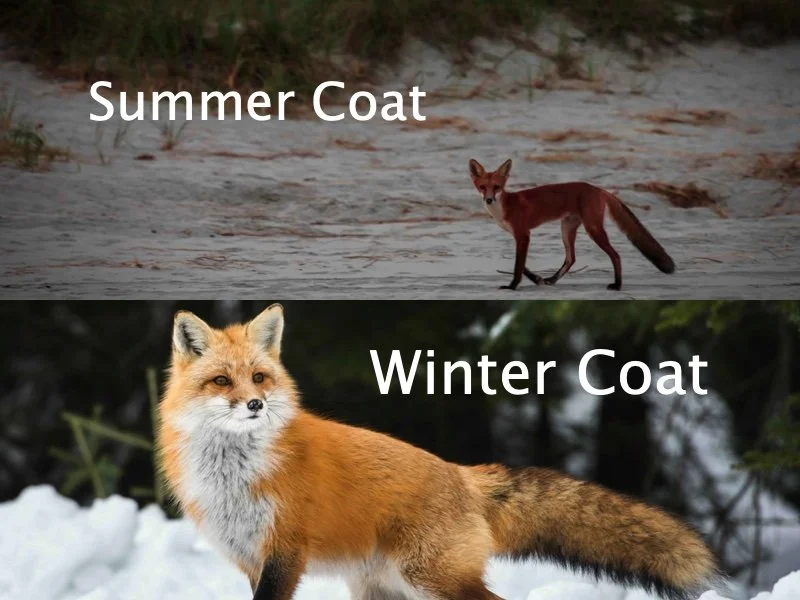
When people see a red fox during the summer they normally freak out and think the animal is sick because it looks thin and the coat is not fluffy. But red foxes undergo a dramatic seasonal molt ("furmageddon") driven by daylight changes and hormones, transforming their appearance and insulation between winter and summer coats. During the winter the extra fur makes the fox look twice as large, round, and fluffy. During the summer, the dense winter undercoat is completely shed off, leaving a much shorter, smoother, and lighter single-layer coat to keep the animal cool for the summer. The fox appears strikingly slim, lean, and sleek—often looking scrawny, patchy, or noticeably smaller (which can mistakenly make people think a fox is sick or starving).
By October or November, a red fox will usually start growing in gradually their winter coat starting from the tail upwards. The bushy tail provides extra warmth when the fox curls up to rest (like a blanket), in addition to balance.
Foxes on New Jersey Beaches
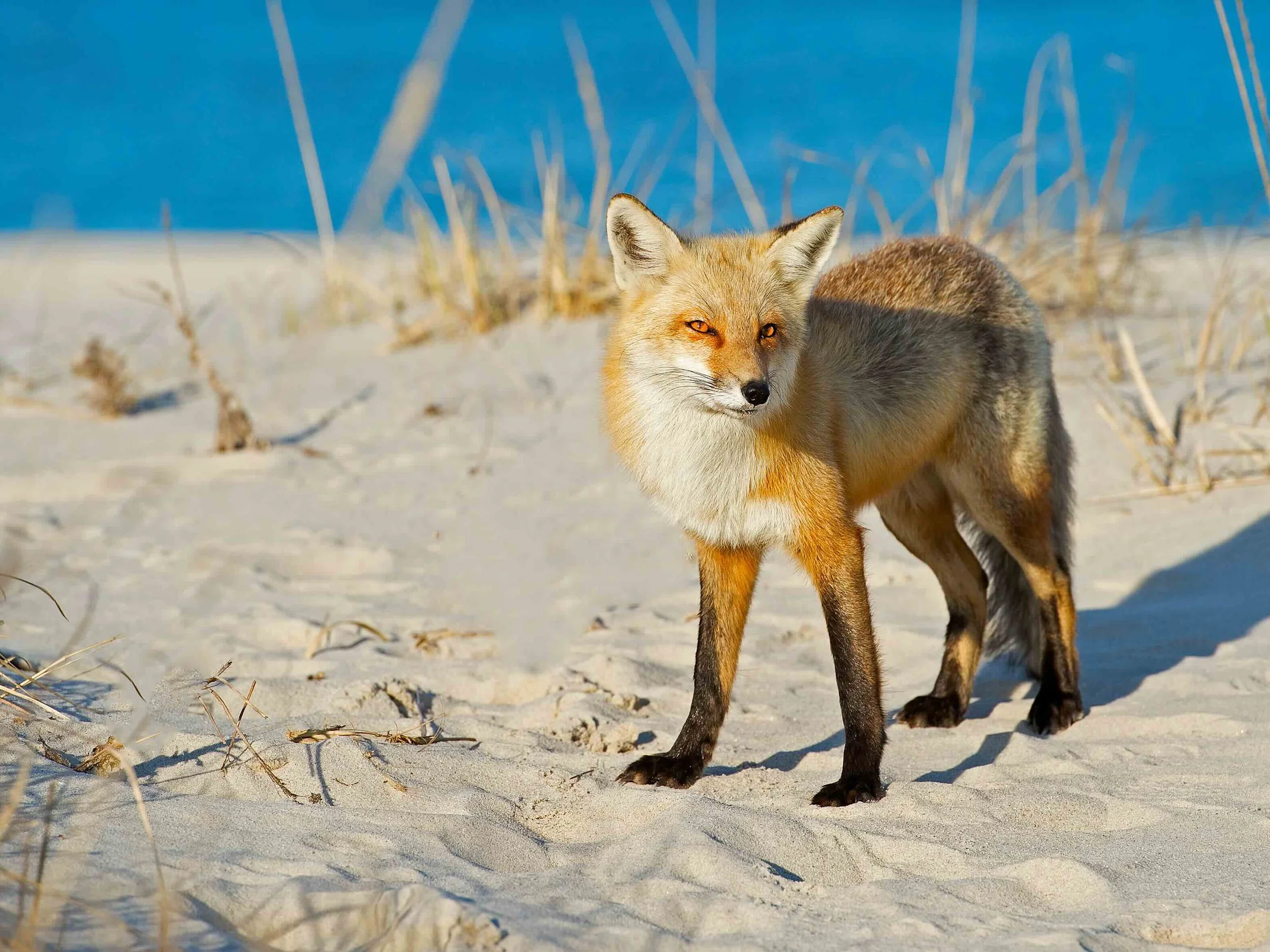
Along the Jersey Shore, beaches can make an ideal den location for foxes for a variety of reasons, including coastal sand dunes offering soft, well-drained ground for easy digging to make a den, an assortment of food sources, and strong protection from larger predators, such as wolves, mountain lions, bears, and bobcats. The open sandy areas and elevated dunes allow adult foxes to spot approaching threats early while keeping their kits hidden
Unfortunately, few of these reasons play a big reason why red foxes are now commonly found along the Jersey Shore. The large amount of garbage and food waste left on beaches by people and in trash bins is a bigger motivation. Red foxes can quickly learn that human activity on beaches, boardwalks, and coastal dunes equals an easy meal. What’s more, while foxes will still naturally hunt for crabs, rodents, fish, and shorebirds along the coast, human food waste provides a quick high-calorie shortcut that often sustains more foxes than natural habitats would otherwise support.
Sadly, the cute sightings of wild foxes along the Jersey Shore come with a price. For foxes, the price is an increase threat of being killed by vehicles from expanding human development projects and busy roadways that fragment their habitats and lead to frequent road mortality. Red foxes also face stress, injury, or death from off-leash domestic dogs in parks and on beaches.
Expanding fox populations on beaches can also be a hazard for birdlife, especially threatened and endangered wildlife in New Jersey including piping plovers (Charadrius melodus) and least terns (Sternula antillarum), which both directly nest on the ground in open, sandy areas, typically just above the high-tide line.
With their expert sense of smell and stealth hunting skills, red foxes will find and eat endangered piping plovers, including their eggs, chicks, and adult birds along the New Jersey Shore, making predation one of the leading causes of nesting loss for these shorebirds in the state by foxes, but also by gulls, rats and raccoons. This practice has sparked local controversy in beach towns like Brigantine, where red foxes are common and often viewed fondly by residents, even while state and federal wildlife officials try to selectively trap and remove predator foxes from barrier islands like Brigantine to protect nesting bird populations.
It is important to point out, however, that red foxes are wild animals and are just trying to survive like everything else in our modern world; it is not really their fault, but nonetheless they get the blame.
Like all other wildlife along the Jersey Shore, habitats for red foxes are being constantly shrunk smaller and smaller by human development, and they must adapt to live alongside humans. This is yet another critical reason to not leave any trash or food waste on the beach. To support fox populations in an ecologically-safe way, you can grow native plants in your yard, encourage your friends to do the same, and support policies that keep more natural habitats untouched by human development!
Threats
Red foxes living along the Jersey Shore face a variety of natural, human-induced, and environmental threats, while they themselves are often managed or targeted due to conflicts with humans. For example, the New Jersey Department of Environmental Protection (NJDEP) occasionally permits or executes targeted culls of red foxes in specific coastal areas (such as near Brigantine) because fox predation negatively impacts ground-nesting, threatened, or endangered shorebirds (like piping plovers). NJDEP also allows landowners or farm employees to kill foxes found actively destroying agricultural products or domestic livestock like poultry and rabbits.
From a health view, red foxes are susceptible to rabies, canine distemper, parvovirus, and fox tapeworms, which can decimate local family groups. Sarcoptic mange is also a painful, potentially fatal skin disease caused by parasitic mites (Sarcoptes scabiei) that leads to severe hair loss, crusting, and hypothermia, which local volunteer groups actively work to rescue and rehabilitate along the Jersey Shore including at Cooper's Fox Den in Manalapan, NJ.
The biggest threat to foxes in New Jersey is from speeding vehicles that strike and kill red foxes in the middle of the night while they are foraging for a meal. Expanding housing developments and busy roadways fragment their habitats and lead to frequent road mortality.
Why are foxes important!
Foxes are expert hunters, using their big ears to capture quick, small prey, such as rodents. This makes them crucial to rodent population control in New Jersey. This is especially important because rodents can carry the bacterial agent responsible for causing Lyme disease.
Red foxes are also scavengers, just like vultures, crows, ravens, and gulls. Scavengers are crucial to the health of an ecosystem because they consume dead/decaying animals and return those important nutrients to the soil, which keeps the soil rich and healthy and supports new plant growth.
Finally, red foxes can also be very important seed dispersers! Because they move around so much, seeds of various plants can get stuck to their fur, or be excreted through their feces, and be spread throughout the environment, which further supports the biodiversity and natural beauty of New Jersey.
Please do not feed foxes!
Finally, it is VERY important for humans NOT to intentionally feed foxes or try to pet foxes. Foxes can become habituated to humans, which means they can become more confident around them and less fearful. This action can draw foxes closer to more populated areas, increasing their risk of being hit by cars, harmed or disturbed by humans, or feeding on domestic animals such as cats, small dogs, rabbits, and chickens, and other birdlife.
We love red foxes at Save Coastal Wildlife and we know you do too. Please do what you can to protect these beautiful animals. We need to keep wildlife wild in our ever expanding modern and domestic world.
Sources:
https://extension.rutgers.edu/fs1325
https://www.tandfonline.com/doi/epdf/10.1080/09524622.1993.9753228?needAccess=true
https://dep.nj.gov/njfw/wp-content/uploads/njfw/red_fox_furbearer_fact_sheet.pdf
https://dep.nj.gov/njfw/wildlife/fox/